As promised... The Deutsches Currywurst Museum in Berlin. A temple for pilgrims who worship at the alter of the wurst.
Your relatively steeply priced (13 Euros!) entrance ticket includes access to all exhibits as well as a tasty little currywurst sample at the little bude (vendor) that you have to walk through to exit the museum (clever!).
The decor includes giant drops of faux ketchup coming down from the ceiling and life-sized fries. To help illustrate the different variations of currywurst, replicas have been constructed, safely protected behind this glass should you temporarily forget that they are plastic and attempt to sneak a piece.
A colorful diagram of the various spices that go into the curry ketchup...
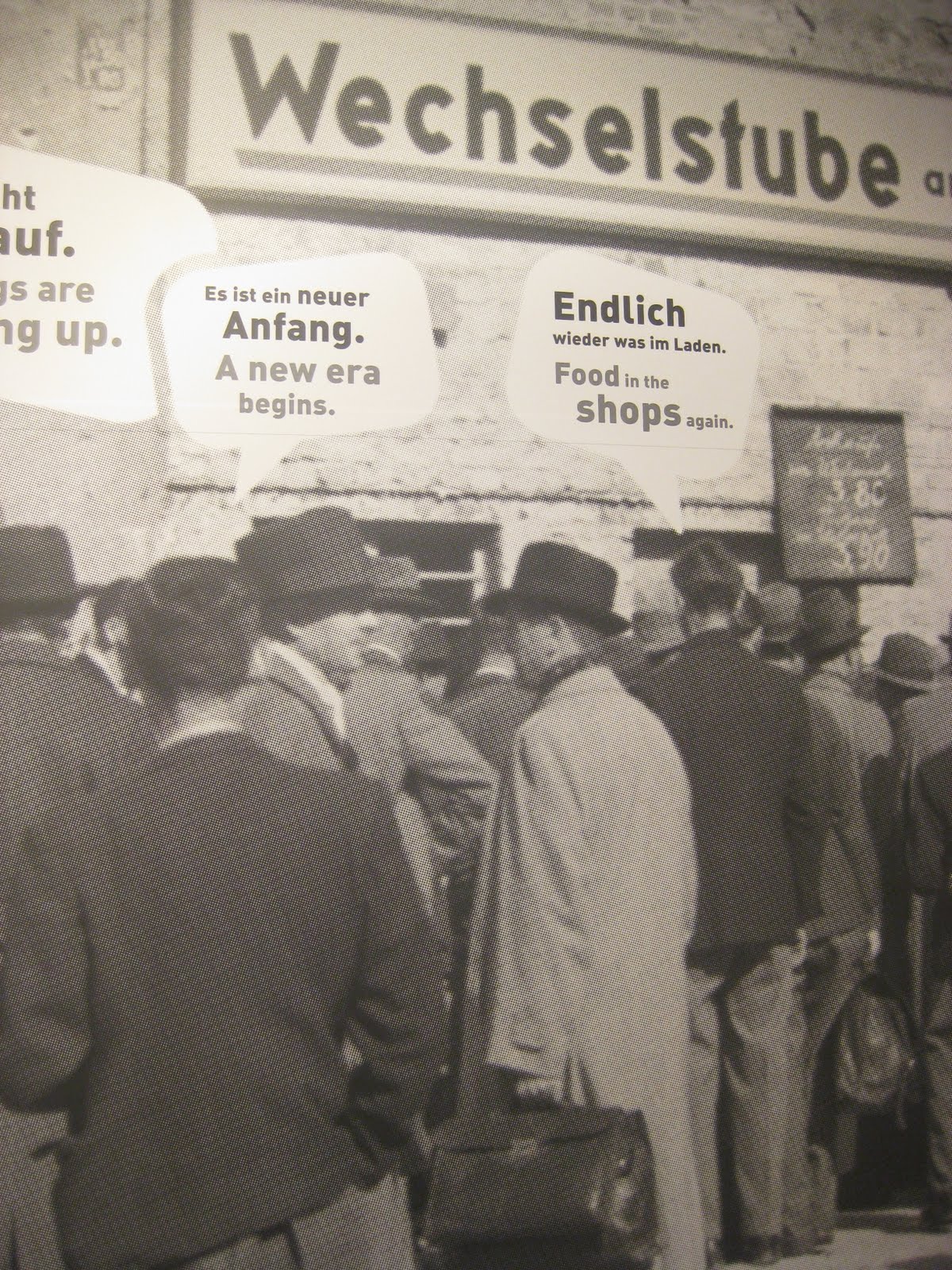
A brief history lesson that includes Herta Heuwer, who Berliners believe invented the currywurst just after the war - part necessity, part ingenuity, and part flirtation with an admiring British soldier. There was a brief mention of the fact that Hamburgers have their own Ms. Heuwer who they believe invented the currywurst... but they didn't dwell on her. Hmmm, a little bias on the part of the museum's home town, or am I just more of a proud Hamburger than I like to believe I am?
And a map of Berlin, currywurst bude by bude, indicated by little pieces of wurst made of cork and silver forks displaying the bude's name. Nicey.
My mom and stepdad, the kids and I will be heading to Berlin next week - my mom hasn't been there since she was threatened by mean German guards at Checkpoint Charlie in the 60s and my stepdad has never been - and the Currywurst Museum is high up on our list of things to see in Berlin.
Oh, it's that time of year again. Today is the first calendar day of Fall, my favorite season (or it was my favorite season until I moved to Hamburg where Summer is Fall, but that's a rant for another day). Besides the vibrant autumnal hews, the crisp but not cold afternoons, the clearest skies of any season, the crunching under foot, warm sun on rosy cheeks, American football tailgates, wool socks and turtlenecks coming out of "winter clothes"-marked boxes, hot apple cider - there are infinite reasons to love this season.
Not the least of which is fall FOOD. Which for me, means SOUPS AND STEWS. Mmmmm, chicken and vegetables simmering in a pot all afternoon, filling the house with the smell of cures for colds and celery. Roasts bathing in their own juices and a few robust onions thrown in for good measure - left in the oven ALL. AFTERNOON. LONG. to slow cook to the point the meat falls apart when the strings are cut. And the best part, coming home after a long walk through the foliage and opening the door to be hit by intoxicating smells that make the neighbors believe that I've been home all afternoon slaving away. Honestly, there are few things I love more than someone else in my kitchen cooking for me. And soups and roasts that you can leave on the stove or in the oven all day, cooking on autopilot, it's like a little fairy chef has snuck in to the kitchen and whipped up something while I've been out. Am I making it clear how much I LOVE this concept?
So in honor of the start of Fall and the Fall food season, a German take on Chicken Soup:
First of all, Germans make Chicken Soup soooooo easy: your grocers has "Suppen Huhn" - soup chickens, specifically tailored to go into your pot for soups or stock. And they ALSO have "Suppen Bund" - celery root, carrots and leak all bound together by a rubber band - all the veg you need for a veggie stock. Those Germans - so practical! Bring your chicken, veggies and water to a boil and then turn it way down, cover and let simmer. Add salt and pepper to taste at the end. And to really Germanify your Chicken Soup, just add:
Mmmmm Semmelknödel, what a find you were. Knödel are basically dumplings and I was craving some of the soup dumplings my mom used to put in her chicken soup - bisquick style. You can make the knödel yourself of course - and I am working on learning how and sharing a recipe with you - but you can also buy them in this little box, boil them for ten minutes and throw them in your soup. They are a bit heavy compared to soup dumplings, as the package illustrates they are usually eaten with meat and sauerkraut - (and we will get to that too) - but I thought they worked well with this hearty soup.
This might be overkill, but I also added another miracle of Germanic cuisine:
Oh Backererbsen, how I love you. "Soup Pearls" is the English name given on the package, while the German translation is "baked peas" and the French is something akin to "nut pasta". They are little balls of baked goodness (completely devoid of any nutritional value to be sure) that add that missing crunch to your soup - should you have been thinking, "You know what this soup really needs? Something CRUNCHY!" I know I was thinking that at least. And the kids love them. Kind of like crumbling soda crackers over your soup.
Probably not Hidalgo's exact words, but definitely what the gente will be joyously shouting for the next few days!
Viva Mexico! Viva la Revolución! Over the next four days Mexico will celebrate the bicentennial of their independence from Spain (the birth of the country) and the centennial anniversary of the revolution (freedom from a thirty year dictatorship and the creation of a new democratic constitution).
Tonight at midnight the Mexican version of the “shot heard around the world” will ring throughout Mexico! In cities and towns throughout the country, a key official will ring a bell and shout the traditional declaration, El Grito de Dolores, and of course, mass revelry will ensue until the wee hours of the morning kicking off the actual holiday: La Independencia de México observed on September 16th.
El Grito de Dolores (The Cry of Dolores) was the battle cry of the Mexican War of Independence; proclaimed September 16th, 1810 by the priest of the people, Miguel Hidalgo in the small town of Dolores. Hidalgo ordered the church bells to be rung and gathered his congregation; he addressed the people in front of his church, encouraging them to revolt against the Spanish-- to take back their country, their land and their beloved Virgin de Guadalupe.
This year is especially festive, as both barrels are locked and loaded. One hundred years ago, the Mexican Revolution began on November 20th with troops of campesinos crying out for "¡Tierra y Libertad!" (Land and Freedom!). Dictator Diaz was successfully overthrown and characters like Francisco “Pancho” Villa and Emiliano Zapata were emblazoned in the history books and iconized in taquerías the world over.
The government has been making a big deal of the event: building monuments, marking several routes along highways throughout Mexico that were traveled either during Mexico's War of Independence or the Mexican Revolution, President Calderón will perform the Grito in Mexico City to a crowd of millions, and many more events and fairs for history bufsf and the patriotic. In a show of solidarity and revolutionary fervor, I am going to come tearing into the plaza on my stallion, guns a-blazing!
Would you believe me if I told you there was no sweet corn in Mexico? That’s right. I said No. Sweet corn. Mexico. I know, crazy talk, right? Well, sadly it is true. Mexico is a country void of lemons and the summer corn smile characterized by sweet yellow kernels stuck between happy teeth.
As is well known, Mexico is the Land of Corn; unfortunately, the only variety grown in the vast fertile fields is extremely starchy -- perfectly suited for pan de elote, tortillas and masa, rather than right-off-the-cob indulgence, or so I thought until I discovered elote. Elote simply means corn. Interestingly, it is also the straightforward name given to the complex punchy flavors of grilled or boiled cobs served up street-side. The charred, roasty-toasty cobs are punctured with a skewer and slathered with a combination of condiments such as: salt, chili powder, butter, lime, mayonnaise, crema, cotija cheese, and epazote. Alternatively, the cobs are boiled in huge vats, the kernels cut off the cob tumbling into a plastic cup; while smacking your lips, you choose which creamy, spicy, sour, salty offerings of flavors you want to parade into your mouth.
While oogling giant hotdogs wrapped in thick fatty slices of bacon sizzling away on a greasy flat top in a square in Cuernavaca, I spotted several stands with bubbling cauldrons of corn on the cob. While I have immense respect for those lining up for the pork party, I gravitated towards the bright smile of a woman dropping shiny yellow ears into the salted boiling water. She handed me a cup of steaming corn. This being my first time, I didn’t hold back. Overwhelmed by that same urge that drives your spoon into every topping at the ice cream sundae bar, I piled it all on. My immoderation was rewarded. Crunchy kernels burst with a mild corn flavor; the creamy mayonnaise-y crema was spiked with piquant lime, subtle heat from the chili and the salty cojita cheese amped-up all of the flavors resulting in a manic scarfing of deliciousness.
Why not rev-up the last of the summer corn with a Mexican street corn rendition? You will not be sorry; this is seriously addictive stuff. Make twice what you think you will nosh and don’t be surprised if those hot dogs go uneaten.
ELOTE: Mexican Street Corn
4 ears sweet corn, grilled with a good char or cut off the cob and roasted in the oven (with a bit of olive oil and salt)
2 tablespoons cup mayonnaise
2 tablespoons sour cream
1/2 teaspoon lime juice
1/8 teaspoon cayenne pepper or chili powder
Kosher salt
2/3 cup crumbled cotija cheese
Lime wedges
Extra cayenne pepper or chili powder, for garnish
Fresh finely chopped epazote or cilantro for optional garnish
If going the whole cob: Crumble cheese onto a plate large enough to fit an ear of corn. In a small bowl mix the mayonnaise, sour cream, lime juice, cayenne pepper or chili powder, and salt. When the corn is cooked, brush each ear with some of the mayo sauce then roll in the cheese. Garnish with a sprinkling of chili powder and cilantro.Serve warm.
If pure kernels are your thing: After the kernels caramelize a bit, take them out of the oven and put in a bowl. Stir in mayo, sour cream, lime juice, salt, cotijo, and chili powder and mix well. Heap onto a serving platter and garnish with a sprinkling of chili powder and cilantro. Serve warm.
The day I met Alejandrina, Hurricane Felix was whirling our way. The category five hurricane was rapidly gaining momentum and was predicted to hit land within two hours, on the North Coast of Honduras, twenty kilometers from Alejandrina’s simple home.
Usually I relished interviewing clients, and today shouldn’t have been any different. Alejandrina’s courage and steely determination was inspiring; against the daunting odds of poverty, she was building a better life. On her third loan from the Adelante Foundation’s micro-credit program, she had created a profitable clothing re-sale business. With the earnings, her goal to fortify the house she and her husband built had been realized—rotting wooden planks were switched out, two cinder block walls were constructed, a leak-proof metal roof replaced the dilapidated jerry-rigged tarp covering.
Proudly showing me around her two room abode, Alejandrina appeared unshaken by the tinny voice broadcasting a clear warning from the radio: Stock up on canned food and clean water, Felix is coming!
A queer, ominous light streamed through the unprotected windows. The dark brooding sky hung over us like an evil force preparing for battle. The air was hair-raisingly still. Raw fear electrified my being; I needed to get home.
Hastily fleeing to my car, I couldn’t help wondering if Alejandrina’s house would survive nature’s imminent smack-down. She met my uncertain gaze with the confident smile of a warrior. Decades of adversity mapped out across her face. Three years later I’m still awed by Alejandrina’s unflappable fight against life’s unrelenting storms.
This post was entered in the GranTourismoHomeAway UK Travel Writing Competition for August: Portrait. We would love to hear your thoughts in the comment section.
In May, I observed municipal elections in the predominantly Aremenian state of Samatshke-Javakheti in the Republic of Georgia. My observation partner, Ruslan, was Kazakh and spoke fluent Russian – as did Aremnui, our interpreter and Valiko, our driver. When the three of them spoke Russian, I patiently waited for an abbreviated explanation of a 15 minute conversation or a joke that was lost in translation. Likewise, when the three of us would speak English, Valiko would turn up the radio. There was a disconnect between Valiko and I based solely on our inability to communicate directly with one another.
On the eve of the election, after we finished mapping the routes to the polling stations, we stopped in the sprawling countryside for an impromptu picnic. Valiko threw out a wool blanket, cranked up some Armenian pop music and offered us all bread that his sister-in-law had made fresh that morning. He opened a bottle of cognac, passed small glasses around and gave a toast with the typical flare that Georgians are famous for.
“Cheers, Valiko jan.” I used the diminutive “jan”, a familiar ending added to one’s name akin to “dear”, a custom I picked up in South Asia that I noticed was also used here.
Valiko froze. A huge smile plowed across his face. He squatted down on his haunches. “Jan?!?!?!?” He echoed approvingly. This little word bridged a cultural gap that volumes of Russian could not.
“To you, Jiffer jan”, he said. We smiled and clinked glasses.
This post was entered in the GranTourismoHomeAway UK Travel Writing Competition for August: Portrait. We would love to hear your thoughts in the comment section.
German currywurst. To some a snack; to others an institution. To the untrained palate it is nothing more than a hot dog with spicy ketchup. But to connoisseurs, it's a delicacy - depending on where you find it.
Last October, I was in Berlin for a short stint and wanted to make sure that I got in one plate of Berlin currywurst. Lowri and I jumped in a cab and I asked the driver if he knew "this one currywurst place in Prenzlauerberg, under the S-bahn tracks, near Schönhauserallee".. that's all I had to go on; no name, no address. To our surprise, our Algerian cab driver, who became quite chatty when he found I out spoke a bit of French, refused to take us there.
"Oh yeah, I know the one you are talking about," he said. "But you don't want to go there."
Me: Um, actually, yes we do. Right there. To THAT one. We want to eat currywurst THERE.
Cab driver.: No, no. Not THAT one. It's dirty. You don't want to go there. I'LL take you to THE BEST currywurst stand in the city.
Me: Well, OK. I guess. I mean. I've already had the currywurst at THAT place and I thought it was great and others swear by it as well but if you know a better place....
Cab driver: Oh, I do.
Me: So, it's your favorite currywurst then?
His face shot up in the rear view mirror, eyebrows askew, feigned shock.
Cab driver: MINE?!?!? I don't eat that sh*t, I'm Muslim. But you know, it's what they say.
Me: Right, OK.
About 25 minutes and 20 Euros later, we arrived at Biers 195 on the Kudamm - one of Berlin's most beloved shopping addresses. My fears that the driver only took us there for a larger cab fee quickly dissipated as I took my first bite. The wurst was juicy, the curry sauce had just the right amount of kick and the fries were also good. Plus points.
So, this episode - in addition to a run in with the "Curry Queen" in Hamburg, where the curry mixes are prepared by a Michelin-starred chef and the sausages include, in addition to traditional pork, venison and Kobe beef - more on that another time - and the incessant debate between Berliners and Hamburgers about who owns the dish, led me to the Currywurst Museum of Germany, in Berlin, one lovely summer day last month.
And I will tell you all about it.. in my next post.