Sunday, October 31, 2010
Dia de los Muertos
Watching people mourn their loved ones, whether they are drinking tequila while doing it or not, seems like a bizarre way to spend an evening, but we were in Mexico and it was Dia de los Muertos, so that is what we set out to do.
The large indigenous population of Patzcuaro promised all-night cemetery vigils and ghoulish revelry—eating, drinking and dancing with the dead. Hoards of Mexican and international tourists flock to the colonial lakeside town every year, and we were among them—sitting in traffic, miles from our destination. Anxious to get out from under the shadow of the tour buses, we took a spontaneous turn down a narrow road, following close behind a mud crusted pickup truck over-flowing with bright orange marigolds. A canopy of colorful paper flags hung low over the crumbling residential street which dead ended at an inconspicuous cemetery.
Buzzing with activity, the cemetery had a cheerful mood. Families were scrubbing tombstones and landscaping graves with fresh flowers and candles in preparation for a night of remembrance and rejoice with their deceased loved ones. Adoration and tenderness were channeled through their deeds. A vibrant blanket of marigold petals was laid out to welcome the souls home. Our serendipitous turn had derailed us from the spectacle of Dia de los Muertos and gave us an intimate peek behind-the-scenes. Leaving the iconic glamorous skeletons and sugar skulls far behind, we had the privilege of experiencing the true spirit of the holiday.
This post has been entered into the HomeAway UK Grantourismo travel blogging contest for October. We would love to hear your comments.
Breaking Fast
The Fez medina
We didn’t intend to fast. Trolling Fez’s medina during the holy month of Ramadan, we found sweet shops shuttered and restaurants baron. Shortly before sundown, our rumbling stomachs encouraged us to follow a group of Moroccan women carrying Tupperware containers as they weaved through the narrow alleyways. Their final destination: a soup shack.
We nuzzled in between diners at the countertop and were promptly presently with a steaming bowl of harira. Behind the counter, a man stood over a 40-gallon tub, ladling spoonfuls into containers for the women to take home to their families; for those of us who didn’t have families waiting, the camaraderie at the countertop among fellow fasters emulated a familial bond. We spoke little as we sat elbow to elbow, spoons poised at our lips, eyes fixed on the setting of the sun, which was broadcast on the television screen above. As the last glimpse of the glowing orb disappeared, the cook exclaimed “Aiwa - Bismillah!” In the name of God! And 50 people crammed in a closet-sized restaurant simultaneously slurped.
As everyone handed in empty bowls and zipped up jackets, we smiled at each other. The cook asked if we had fasted all day too and when we said yes, the other diners nodded in approval. For a few minutes, we were part of a collective ritual of breaking fast, and in doing so were adopted into a new family - if only for the three minutes it took to slurp a bowl of soup.
This post has been entered into the HomeAway UK Grantourismo travel blogging contest for October. We would love to hear your comments.
Thursday, October 21, 2010
Flying Jacob
Chicken breast + Bacon + Bananas + Whipped Cream + Peanuts + Chili Sauce = Flygande Jakob, Swedish for Flying Jacob. (Though known in some parts of the country as "Jumping Jacob").
Yes, a Swedish dish. Though the combination of bananas, chili and peanuts made me think, "West African?"
As the story goes, the dish was named for its inventor, Swedish freight pilot Ove Jakobssen and published by his chef friend in the magazine, "Allt om mat" in 1976. It became an overnight sensation and took Swedish households by storm. A family favorite in Sweden to this day, although every family apparently has their own slightly different version of the recipe.
The rather odd sounding combination reminded me of the sandwiches (remember peanut butter and marshmallow fluff?) and casseroles (the excellent macaroni, canned tuna, frozen peas, canned cream of mushroom soup and - the best part - crumbled potato chips - variety) I used to eat as a kid growing up the Midwest.
They may have sounded odd, but they tasted fantastic.
And so did the Flygande Jakob at Café Frau Larsson. The recipe came from Frau Larsson herself, i.e. it is the one Annika's Swedish mother served to enthusiastic eaters at the family dinner table.
If anyone is interested in Frau Larsson's fabulous recipe, perhaps Annika will share it. Otherwise, below is the original recipe, published in 1976 in "Allt om mat" (issue 13).
Original and traditional Swedish Flying Jacob (serves 8)
Ingredients:
4 rotisserie chickens
1 tsp Italian salad spice
4-5 bananas
4 dl double cream
2 dl "ketchupish" chili sauce
2 packages bacon
1 dl salted peanuts
Instructions:
1. Set oven to 225 degrees celsius.
2. Strip all the meat of the chickens and put in an oven pan. Taste the chicken and if needed season with salt and pepper. Sprinkle the salad spice on top.
3. Peel the bananas. Cut them first once in half and then split them length wise making four pieces of each banana. Put on top of the chicken.
4. Whip the cream lightly and mix with the chili sauce.
5. Distribute cream and chili mix over the chicken and banana. Bake in oven about 20 minutes.
6. Meanwhile, cut bacon to small pieces and fry until crispy.
7. Spread crispy bacon and peanuts over the baked chicken.
Serve with a salad and boiled rice.
Delicious!!!
Wednesday, October 13, 2010
Wednesday Snapshot(s): The Virgin Is Coming! The Virgin Is Coming!
A grumpy, yet surprisingly festive pilgrim.
Yesterday Carter, Oscar and I joined hundreds of thousands of pilgrims in the Procession of the Virgin of Zapopan. October 12th of every year the Virgin returns to her home, The Basilica of Zapopan, from her grand church tour. Starting in June, she visits every church in Guadalajara for a week, inciting mini-fiestas along the way. Her last stop is the Cathedral of Guadalajara and from there she is escorted through the (roughly) five miles of urban boulevards by revelers hoping for a miracle or just a good time.
Schools are closed for the day and with so many families milling in one relatively concentrated area, the vendors are out in force. There is no celebration in Mexico without an impressive showing of ice cream carts, taco trucks, fry vats, card tables loaded up with slices of flan, wheel barrows pushing containers of fresh fruit, donuts and sticky sweet coconut macaroons.
Due to the crowds, our late start, and the sinful culinary offerings tempting us at every step, we didn't actually make it to the church. My faith was tested by a street taco, and (surprise!) the street taco won! My opportunity to worship in the local tradition of walking on my knees from the gates outside the church to the front pew was blown by tacos barbacoa. (It is said that some walk on their knees for the whole procession, but apparently the die-hards were way ahead of me, because I didn't see any one with such pure devotion.) What I did witness and could totally get on board with was lots of eating and drinking in the streets!
The paper reported a turn-out of 1.8 million people!
Thursday, October 7, 2010
To You, Frau Larsson
Zimtschnecke at Frau Larsson's
This post goes out to my friend Annika who, last week, opened her own Swedish café in Hamburg, Frau Larsson. In doing so, Annika did something that few of us do: she not only talked the talk, she walked the walk. I've listened to her describe her idea for a Swedish café for the last three years - the concept, what she would bake, the menu, the decor, a location. And I'd respond with plans for my American style breakfast place - french toast, eggs benedict, etc. And I still talk about it, - that AND my cookbook-slash-test kitchen restaurant AND my import shop with textiles from women's coops in Afghanistan, and and and....
But last week, Annika OPENED FRAU LARSSON. She did it. She realized a dream. And I am so very proud of her.
Frau Larsson: Kaffee, Kuchen, Köttbuller - coffee, cake and swedish meatballs. Sounds better in German...
Frau Larsson's sells delicious Swedish specialties like Blabärssylt (that's blueberry jam to you and me)
And Swedish mustards...
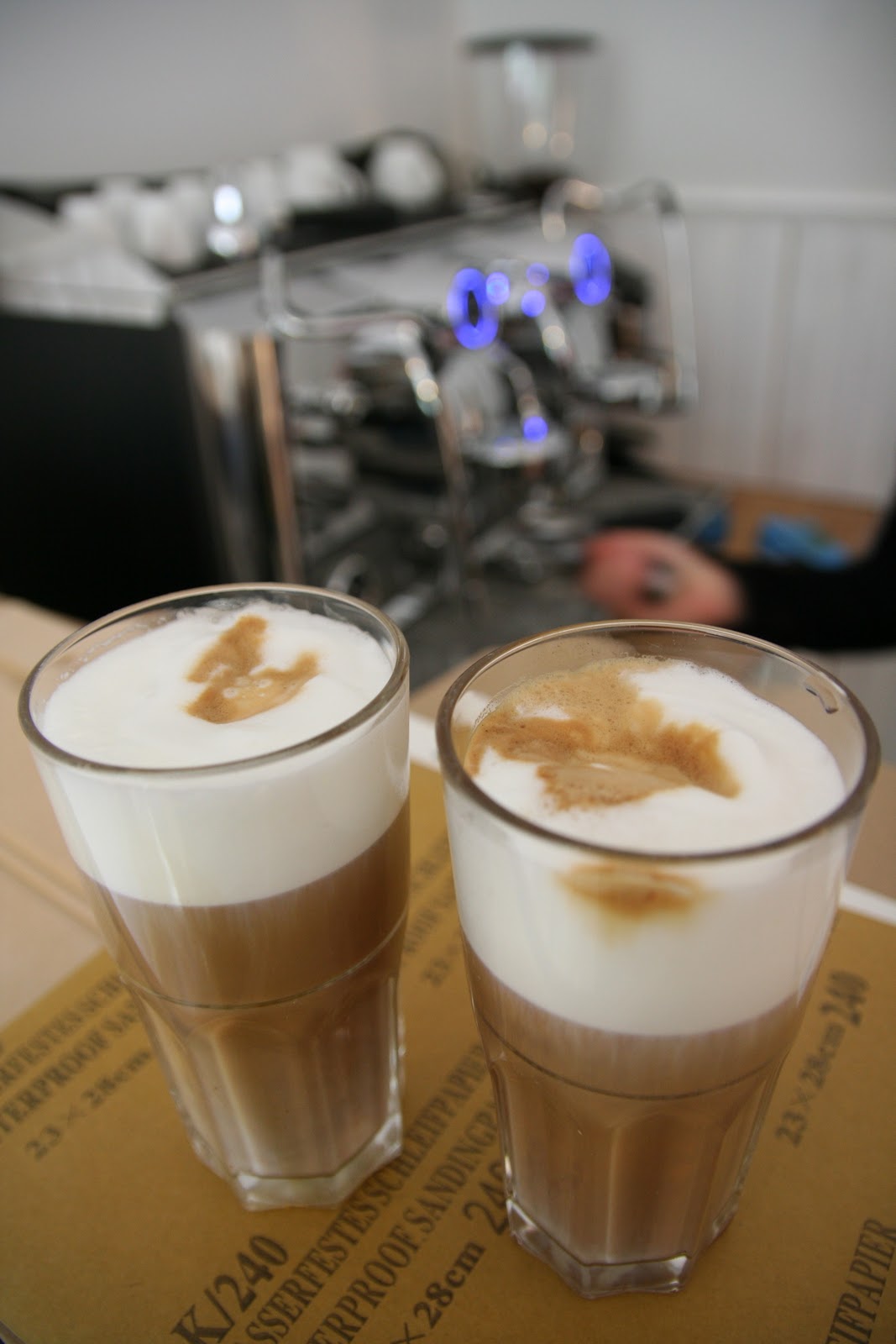
And of course, a mean latte macchiato..
Congratulations Frau Larsson! Wishing you many full tables, happy customers and permanent place on the Schinkelplatz scene!
Thursday, September 30, 2010
Afghan Heirlooms
Qabili pilau and sabzi
Technically I was not supposed to be there. My Afghan colleague Najla invited me to dinner and I gladly accepted the invitation. Riding in an unarmored car to her home in Karte Parwan, one of Kabul’s residential neighborhoods, where the outer walls were less than ten meters high and there were no armed guards outside, was breaking all the rules of security protocol.
Due to the volatile situation and cultural restrictions, I had limited contact with my Afghan counterparts despite the fact that I lived in Kabul. Therefore, this invitation was more than just dinner, it was a window into the lives of the people I worked with everyday, but otherwise had little access to.
Najla and I took a seat on the toshaks, cushions laid out on the floor in the living room. Her nieces ran in giggling, gracefully balancing trays with tea and sweets and depositing them on the floor in front of us. I attempted to follow Najla’s lead and gracefully fold my legs beneath me but wound up shifting every few minutes, uncomfortable and awkward.
“I didn’t tell you, but this is a bit of a special occasion,” Najla said. “My eldest brother has just returned from Pakistan. We are finally all together in Kabul again!” Najla’s family fled Kabul like so many other residents of the Afghan capital during the civil war that engulfed the city in the early 1990s. They made their way over the Pakistani border into Peshawar where they stayed in camps until they returned after the fall of the Taliban.
The room slowly filled with family members and everyone squeezed in around the plates that began pouring from the kitchen: dark green sabzi, stewed spinach, banjan borani, delicious fried eggplant topped with tangy yogurt and paprika; aushak and mantu, hand made dumplings filled with either leaks or ground meat and covered with yogurt, lentils and mint.
But the centerpiece of the meal was the qabili pilau, the dish that heralds a special occasion. The faint brown rice was redolent with spices including cardamom, cinnamon, nutmeg and anise. While the fragrance was synonymous with a special holiday meal, the combination of the soft carrot strings, the sweet, robust raisins and succulent chunks of lamb made this dish feel more like comfort food.
When I inquired about the spices, Najla was coy. “The exact mixture of spices in the pilau varies from family to family,” she said. “It’s always slightly different and,” she paused, “it’s top secret,” she smiled mysteriously. “What you are eating is my mother’s recipe, which she learned from her mother, which she learned from her mother….” She trailed off.
Passed on from generation to generation, the family qabili pilau recipe is an heirloom. It is an oral history, something that they carried with them when they left everything else behind. As most Afghans at some point in their lives have been internally displaced or refugees, like Najla and her family, this recipe is more than just a meal - it is remembrance.
Due to the volatile situation and cultural restrictions, I had limited contact with my Afghan counterparts despite the fact that I lived in Kabul. Therefore, this invitation was more than just dinner, it was a window into the lives of the people I worked with everyday, but otherwise had little access to.
Najla and I took a seat on the toshaks, cushions laid out on the floor in the living room. Her nieces ran in giggling, gracefully balancing trays with tea and sweets and depositing them on the floor in front of us. I attempted to follow Najla’s lead and gracefully fold my legs beneath me but wound up shifting every few minutes, uncomfortable and awkward.
“I didn’t tell you, but this is a bit of a special occasion,” Najla said. “My eldest brother has just returned from Pakistan. We are finally all together in Kabul again!” Najla’s family fled Kabul like so many other residents of the Afghan capital during the civil war that engulfed the city in the early 1990s. They made their way over the Pakistani border into Peshawar where they stayed in camps until they returned after the fall of the Taliban.
The room slowly filled with family members and everyone squeezed in around the plates that began pouring from the kitchen: dark green sabzi, stewed spinach, banjan borani, delicious fried eggplant topped with tangy yogurt and paprika; aushak and mantu, hand made dumplings filled with either leaks or ground meat and covered with yogurt, lentils and mint.
But the centerpiece of the meal was the qabili pilau, the dish that heralds a special occasion. The faint brown rice was redolent with spices including cardamom, cinnamon, nutmeg and anise. While the fragrance was synonymous with a special holiday meal, the combination of the soft carrot strings, the sweet, robust raisins and succulent chunks of lamb made this dish feel more like comfort food.
When I inquired about the spices, Najla was coy. “The exact mixture of spices in the pilau varies from family to family,” she said. “It’s always slightly different and,” she paused, “it’s top secret,” she smiled mysteriously. “What you are eating is my mother’s recipe, which she learned from her mother, which she learned from her mother….” She trailed off.
Passed on from generation to generation, the family qabili pilau recipe is an heirloom. It is an oral history, something that they carried with them when they left everything else behind. As most Afghans at some point in their lives have been internally displaced or refugees, like Najla and her family, this recipe is more than just a meal - it is remembrance.
Girls' School in Herat
Shah-e Doh Shamshira Mosque, Old City, Kabul
Stunning Band-i-Amir lake, Bamiyan Province, Central Highlands
.jpg)
Buzkashi, game traditionally played on Nowroz, or New Years, with players on horseback and a headless goat as the ball
Women in burqas visiting the sick at the Blue Mosque in Mazar-i-Sharif
Outside boys' school, Herat
Shopkeepers at prayer, Jalalabad
Herat's Friday Mosque
The "kite runners" - boys chasing kites at the King's Masoleum, Kabul
This post has been entered into the September Grantourismo HomeAwayUK travel blogging competition.
Labels:
Aushak,
Buzkashi,
Grantourismo,
HomeAway Holiday Rentals,
qabili pilau
Wednesday, September 29, 2010
Wednesday Snapshot: A Crust Is a Crust, Is a Crust......
I had no idea tortillas had crusts! What a discovery! The innate loathing and childhood rejection of The Crust knows no cultural boundaries. Yesterday, my neighbor’s son was at our house and I offered to make him a quesadilla. The above was what he left on his plate. Crispy with grease, cheese oozing out the sides I couldn’t understand why the edges had been systematically discarded. When I questioned his mother, she airily responded that he never eats the crusts. Crust? On a tortilla? Where did that come from?
One could deduce from this fascinating anthropological discovery in my kitchen that kids in all cultures are totally insane and their picky nonsensical food prejudices are not random whims to make us crazy, but perhaps encoded in their DNA. How could this be learned behavior? Where does a Mexican kid learn that crusts are pure evil and then apply it to his culture's answer to bread?
P.S. He also said, “no gracias” to the salsa, and dipped his quesadilla into ketchup (!). Kids are weird in any culture.
Subscribe to:
Posts (Atom)